

Published First on MetaTalk
Who is going to master the metaverse? A question that everyone asks but no two answers are similar. And in truth, it’s always been very difficult to accurately predict the next technological evolution and who is going to profit the most from it. What we can do is deconstruct the likely requirements of the metaverse, and reverse engineer to see which company is positioned currently with the most number of advantages.
That’s what I am going to do in this article to figure out if Microsoft is the top contender for the metaverse and what it means for the future of the company. In my previous articles, I have discussed the ideal scenario of a metaverse, i.e. decentralized environment, immersive experience, high-res hardware, superfast computing, etc. Most of these conditions are far out of reach simply because we don’t have the technology yet. But what we have here is a company that can create or help to create the next generation of machines.
Microsoft has found itself a unique opportunity to serve the market demand without needing to reinvent itself or find itself in uncharted waters. But it didn’t just so ‘happened’ out of nowhere, it has been a work-in-progress for decades and now this could lead to another feather on Microsoft’s hat.
Microsoft’s Journey to Metaverse
As many people have already said before me, the metaverse is like the internet, it has many aspects to it. In its barebone version, there are three—software, hardware, and cloud. Each of these aspects branches out several others creating the huge metaverse tree. Each of these branches caters to a specific solution.
The metaverse is huge machinery constantly working to provide an immersive experience. Work, game, family time, socializing, everything can be done in the metaverse. So when you talk about the metaverse, you’re not talking about some brand new product, you’re essentially talking about everything you have ever done in your life, all in one store.
That’s where Microsoft gets the advantage.
For years, Microsoft has been riding the waves to dominate new markets, whether it be the OS market, the office software market, the cloud computing market, etc. The only time it has failed is in the smartphone market, that too with good reasons.
Microsoft has been developing software solutions for decades, it has a myriad of enterprise software solutions, it has a gaming console and owns some of the biggest games of the market, and it has a strong cloud presence. So when dominance in the metaverse comes up, Microsoft checks all the boxes, with the exemption of VR headsets (so maybe not all).
As Matthew Ball summarized it,
[Microsoft] has hundreds of millions of federated user identities via Office 365 and LinkedIn, is the second-largest cloud vendor in the world, has an extensive suite of work-related software and services that span all systems/platforms/infrastructure, clear technical experience in massive shared online content/operations, and a set of potential gateway experiences via Minecraft, Xbox + Xbox Live, and HoloLens.
Let’s look at how Microsoft covers all the ground for the Metaverse race.
Gaming
It’s widely believed that gaming will be the gateway to the metaverse. Even the Microsoft CEO Satya Nadella said, “Metaverse is just games”. So how does Microsoft look on this front?
Microsoft bought Activision Blizzard for a staggering $68.7 billion, that’s the biggest sum any US-based company has ever paid. But once you see the titles Microsoft gets from the deal, it won’t seem absurd anymore. Names like Call of Duty, Diablo, Starcraft, Candy Crush, and World of Warcraft, now belong to Microsoft.
Microsoft has been in gaming for a long time, but it was never a serious competition for the market leaders like Sony or Tencent. But with this deal, Microsoft can be a tough competitor in the market.
And what makes Microsoft stronger is Xbox. Like its gaming efforts, Xbox has been the distant second to Playstation. What makes Xbox different from Playstation is the Xbox game pass. It’s the Netflix model of games where you can play any Xbox games you want for a monthly subscription without having to buy the game. The only problem was, Microsoft didn’t have a wide list of AAA games to offer in the subscription. But now with the Activision deal, it has more than enough to attract buyers from all categories.
This will hugely enforce the dominance of Microsoft in the metaverse gaming community.
Potential Metaverse Platforms
The way the metaverse is painted today, it’ll look a lot like some gaming environments, especially those games that offer places like non-gaming gathering arenas. Obviously, it isn’t exactly what the metaverse might look like, but these are the closest examples.
And from that perspective, Microsoft owns one of the top platforms—Minecraft. With millions of daily active users, Minecraft can easily be presented as the best potential metaverse platform. The users can build over the platform, set their own rules, gather together, invent their own games, and also monetize certain ventures. Sounds a lot like metaverse to me.
Even if Minecraft can’t be in the metaverse, it surely can help Microsoft create the metaverse with an existing reference.
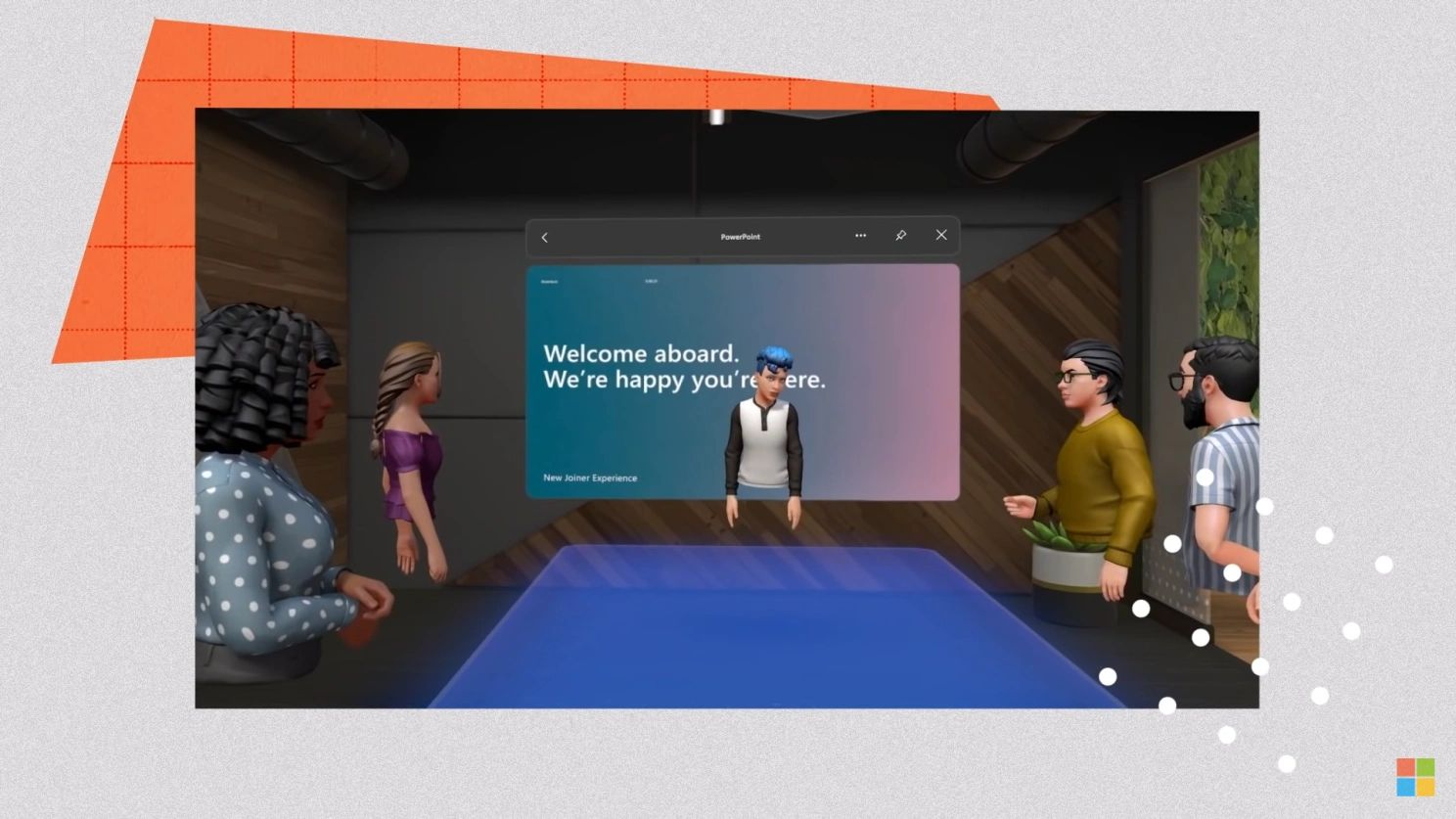
On the other hand, we have Mesh, a collaboration and communications platform that gives strong metaverse vibes. This is being created keeping the metaverse in mind. The goal of the metaverse is to eliminate the boundaries of our digital lives by combining everything together. But the irony is, we can’t even dm a person if they aren’t in the specific workplace. Mesh is trying to solve this problem by creating an all-encompassing solution that merges everything together.
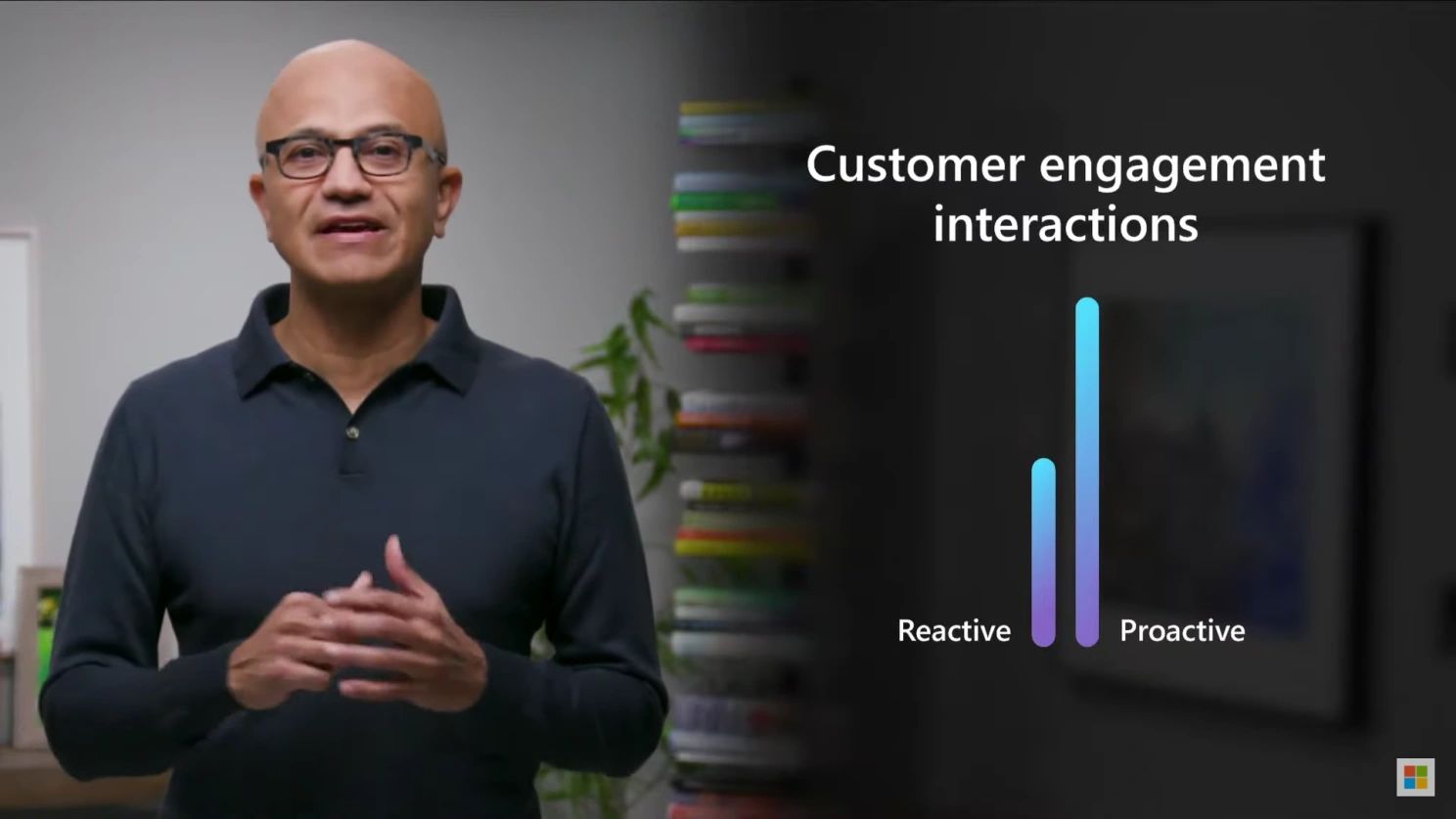
In his presentation of Mesh, Satya Nadella presented a scenario where a bunch of people, all from different groups and even companies, sorted a problem by working together without even being a member of a certain workspace. And that’s just one part of the ecosystem, it also has a VR environment for users.
These are all metaverse-compatible ability-enhancement designs, deploy strategically and you win the battle.
The Competition
This is probably Microsoft’s biggest advantage, they don’t have any real competitors as another all-encompassing metaverse choice. The probable metaverse contenders are Microsoft, Meta, Sandbox, Decentraland, and some other gaming platforms like Roblox, and Epic. But other than Microsoft, all the other platforms have really specific expertise.
Meta dominates the VR headset market with Oculus and collaboration with Horizon, Decentraland and Sandbox are crypto metaverses built specifically as a metaverse, Roblox and Fortnite are gaming-focused platforms. All of these one defining quality, but not enough to compete with Microsoft because they have it all.
As of now, the crypto metaverses aren’t in the scene of traditional tech and are mostly populated by crypto enthusiasts. Meta, the company that formally declared the metaverse war, is spending huge amounts on R&D to figure out the best possible hardware and software combinations, but they lack experience. As I have previously pointed out, it’s not possible to turn into an enterprise software manufacturer from a social media company just because Zuck is willing to spend $10B every year.
Conclusion
While it may take up to a decade to build the idea of metaverse by overcoming all the shortcomings we’re currently facing, it’s a logical decision to bet on Microsoft as the formal winner. Though a decade is a long time and anything can happen, it’s safe to say companies like this know how to adapt and reposition themselves in the long run to get the best result.
Microsoft has been on top of the digital evolution process for half a century. And when it comes to analyzing the metaverse contenders, there simply isn’t a whole lot of argument against it.
Follow me on Linkedin and TommasoDiBartolo.com for more content related to the Metaverse.